Showing posts with label History. Show all posts

Thursday, May 26, 2011

Half-Restored 1967 Oldsmobile Toronado by Precision Restorations

Missouri-based Precision Restorations have given another meaning to what a partial restoration job means. In an attempt to find the best possible way to promote themselves, the team has decided to build a marketing car that best illustrates their skills and professionalism.

In a move that we could dare to call ingenious, Precision Restorations have taken a 1967 Oldsmobile Toronado screaming for a makeover, and have given an out-of-the-box look to exactly half of it, both inside and outside. Lift up the hood and you’ll find the same approach.


read more "Half-Restored 1967 Oldsmobile Toronado by Precision Restorations"

Thursday, April 14, 2011

The Great Mosque of Djenné - The Largest Mud Brick Building in the World

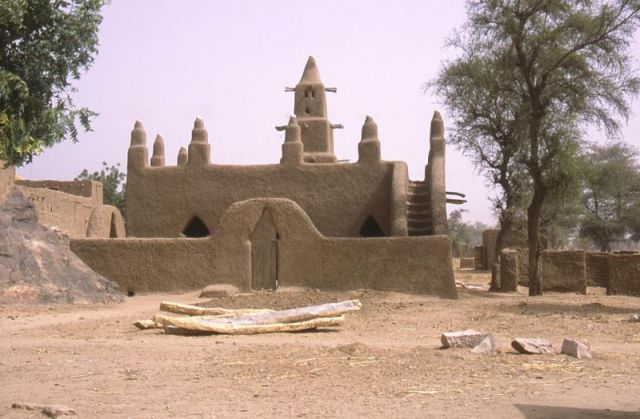
The Great Mosque of Djenné is the largest mud brick building in the world. The mosque is located in the city of Djenné in Mali on the flood plain of the Bani River. It is one of the most famous landmarks in Africa. Along with the 'Old Towns of Djenné' it was dubbed a World Heritage Site by UNESCO in 1988.

The date of construction of the first mosque in Djenné is unknown but dates as early as 1200 and as late as 1330 have been suggested.

The walls of the Great Mosque are made of sun-baked mud bricks called 'ferey', a mud based mortar, and are coated with a mud plaster which gives the building its smooth, sculpted look. The walls are between 16 in and 24 in (0.4 to 0.6 m) thick. The thickness varies depending on the wall's height: taller sections were built thicker because the base has to be wide enough to support the weight. Bundles of deleb palm wood were included in the building to reduce cracking caused by frequent drastic changes in humidity and temperature and to serve as readymade scaffolding for annual repairs.


The walls insulate the building from heat during the day and by nightfall have absorbed enough heat to keep the mosque warm through the night. Gutters, made of ceramic pipes, extend from the roofline and direct water drainage from the roof away from the walls. Half of the mosque is covered by a roof and the other half is an open air prayer hall or courtyard. The roof of the mosque is supported by ninety wooden pillars that span the interior prayer hall. Vents in the roof are topped with removable ceramic caps, which when removed allow hot air to rise out of the building and so ventilate the interior.

The Great Mosque was constructed on a raised platform with a surface area of 5625 m² (62,500 ft²), which has so far protected the mosque from even the most severe floods. (Wikipedia).


Source: clarepawley
read more "The Great Mosque of Djenné - The Largest Mud Brick Building in the World"